I have been mulling over what to write about next without a lot of enthusiasm. NL-Expatriate in comments section has given my some ideas that I am a little knowledgeable in.
While I do not have a theological bent, forced to go to church and Sunday school until I was 14, I am interested in the history and present day influence the Moravian Church has/had on the Inuit of Labrador. So here is Moravian 101 as I see it.
NL ExPat quotes in Italics.
Thanks for the link on the Morovian Bible.So do people still practice the Moravian faith? Or is it still a faith? Sorry for my ignorance but the religious studies I had during my school years didn't cover Labradors Moravian past roots to my knowledge. I learnt more about the Prairies other canadian religions than my own province :(
Yes, the Moravian faith is still practiced in Labrador. It is not as strong as 30 years ago, but it is still functioning in the following communities; Happy Valley-Goose Bay/Lake Melville, Makkovik, Hopedale and Nain. For some years now there has not been an ordained minister in any of the communities, the world and North American bodies of the Brotherhood have cut Labrador loose to operate as best they can on their own. Both bodies used to send ordained ministers in, the one and only Inuit ordained minister, Rev. Ray Hunter passed away some years ago, one of his daughters is a lay minister now.
In all the communities there are lay ministers, these usually come from the church elders or chapel servants.
Attendance is not strong on the coast normal Sundays; I am told HV-GB gets a reasonable turn out though. ‘Special days’ Easter and Christmas and new years get good turn outs, and of course weddings and funerals.
Moravians have left some unique traditions that are observed. Advent is a big deal up here, good for the stores too. Christmas fills the church, they have to have 2 sessions in Nain, and then Nulliuks [old Christmas] is still observed in a big way, good for the stores again too.
The ‘special days’ are really a nice touch. Young people’s days, separate for girls and boys, get the church elders and chapel savants involved in cooking meals and supervising church doings all day. The young people get dressed up in more traditional dress; have colored ribbons around hats and the like.
Then there is old peoples day, widow’s day and maybe more but they escape me now. 50th birthdays are special too, people get together and cook meals and you invite people into your home and eat, it’s usually done in shifts so there is no hanging around much after you are full. Some hold the day in the hall these days.
What I like about the physical church is that they are not heavily ordained with icons and the like. Just plain wooden construction, a lectern, maybe a photo or two of past chief elders. Of course a spire with a bell, these bells used to be used as fire alerts too until the volunteer fire bodies procured there own sirens. I imagine that could have been confusing at times.
Nain church has a balcony at the rear housing an organ as well as space for the choir, the brass band used to sit up there too. Hopedale has a raised section at the rear where the string band used to play.
A funny little anecdote I have is. My first Easter here we attended a service; the place was blocked, during the service there was the usual sermons, hymns along with what I thought was a recording of the brass band. I thought it a recording because every time the band started up I looked around trying to find them, they were nowhere in sight inside the church. On leaving the church I asked why there was a recording played when the band members were around, Fran said “look up there”. I look up at the roof of the church, here were the brass band guys standing, some what precariously, on the roof of the church. Bloody cold evening too.
That is another thing I liked about the church here. The Nain brass band is not functioning now, either is the string band in Hopedale, but in their time they used to play when the ‘first boats’ arrived in summer, as well they used to go around town playing at different spots on special days. One thing still going is on peoples 50th birthday the choir will come into your home and sing if asked.
The lose of the bands is sad, some of the members are still around but getting on. Hard on the hands out in the cold. They had these big felt mitts and covers over the instruments. The music was something else too, old German influence, the music sheets have garnered an interest from a musicologist from the south, will try and get some links to him later.
Another lose is the tradition of a church service leading up to midnight on New Years eve. You would go to church for a brief service, on leaving the bells would ring at midnight, the usual greeting would ensue, then people would go around for several hours visiting homes, some would have big meals cooked. That is mainly lost what with modern society catching up here, but some families still do the big meal and visiting is mainly restricted to family and close friends, and the church service is still held I should add.
Some more traditions here; woman and men sit on opposite sides of the church, woman left men right. Unless the woman is in company of husband, she can then sit on the right with him. Chappell servants sit the same way and up at the front at right angle to the rest of the congregation. Other communities have different seating arrangements I believe.
While not religious I still find the brass band music moving, I especially like hymns in Inuktitut, it has a certain melancholy about the sound. Some years back a choir from Cuba visited Nain, they did some numbers with the Nain choir, some thing else man. I have also heard a regional ‘coming together’ of members from each community choirs, that was something special too.
Think I should break this up, to be continued.
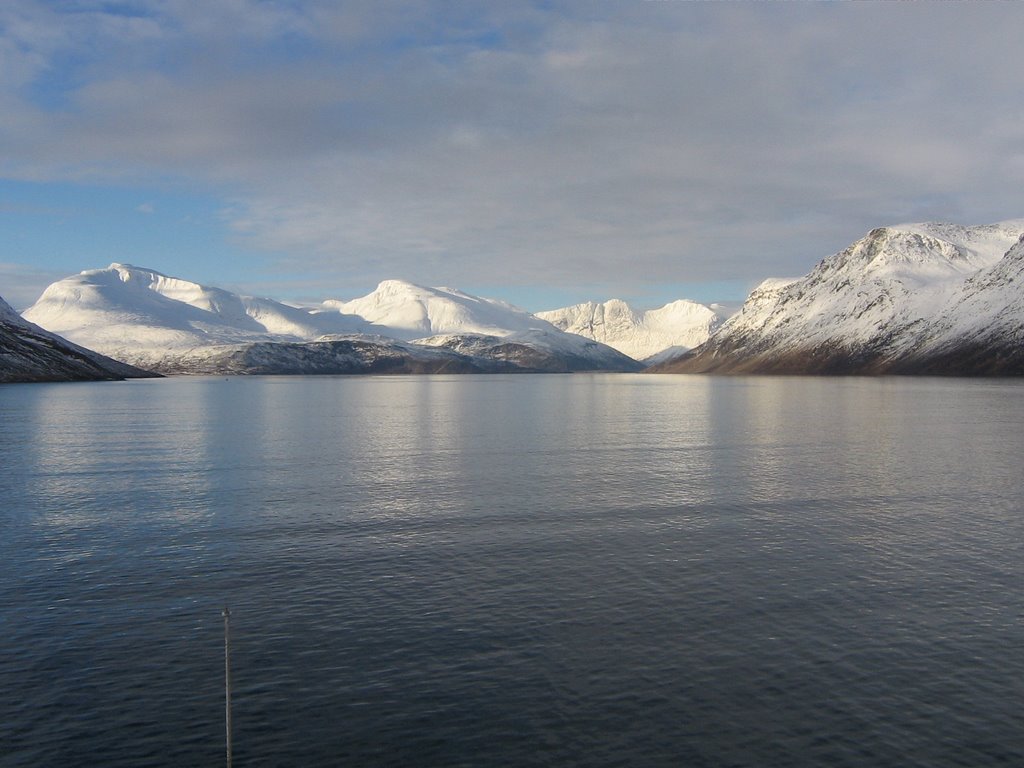

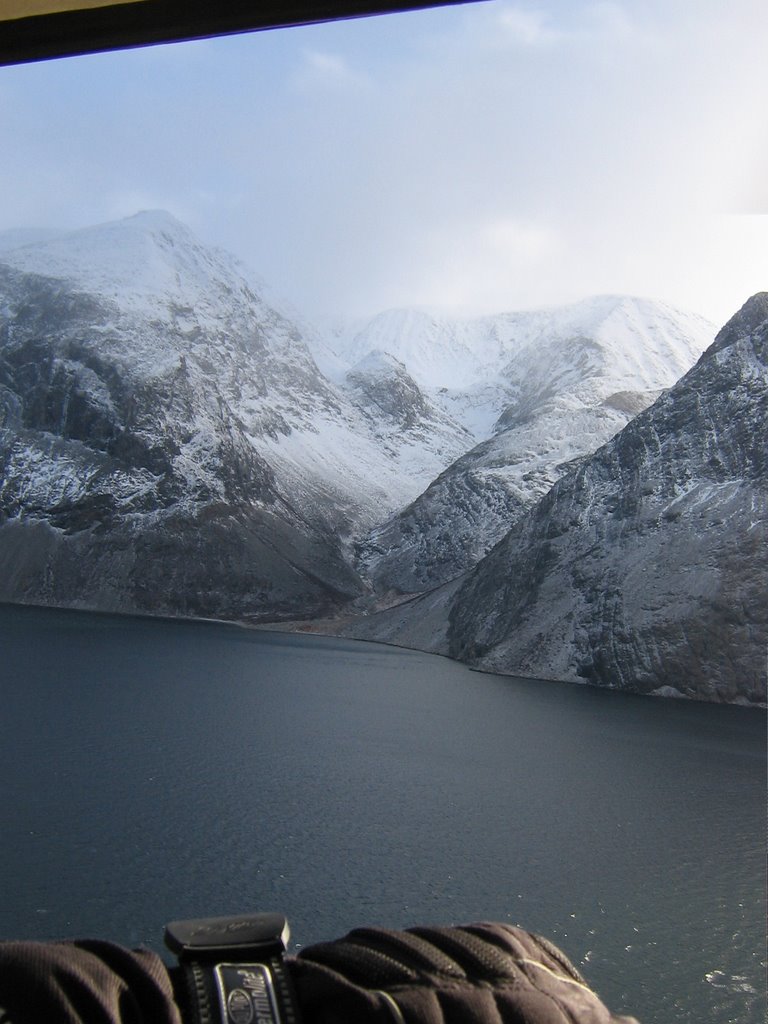






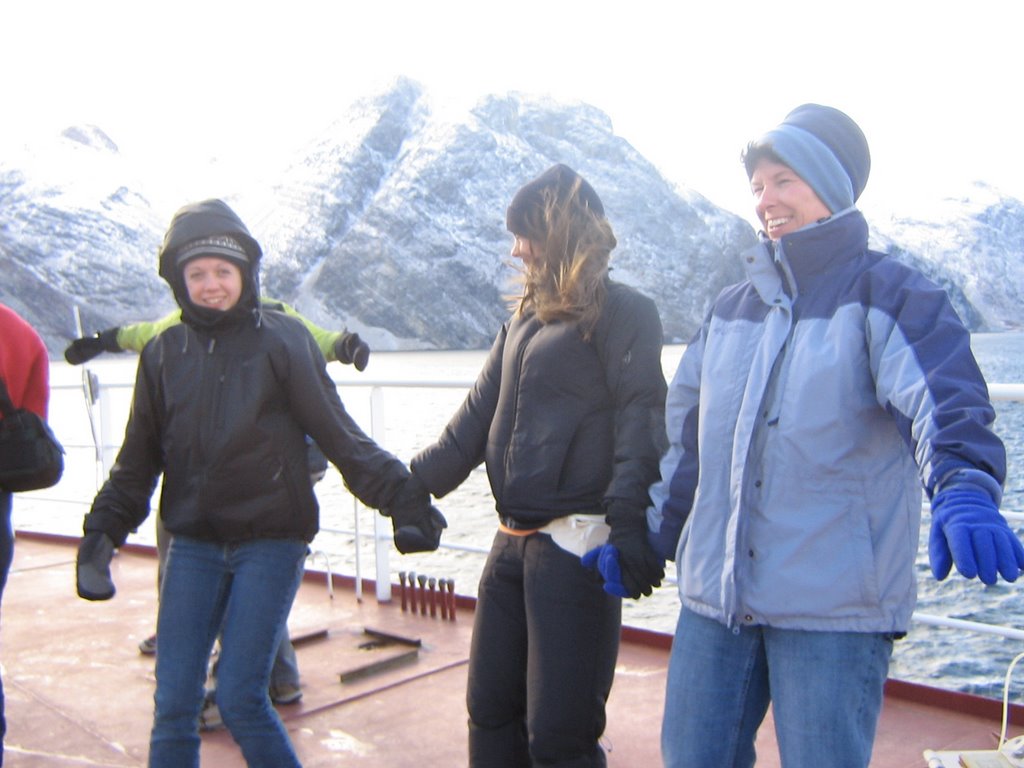 Geting the sea legs.
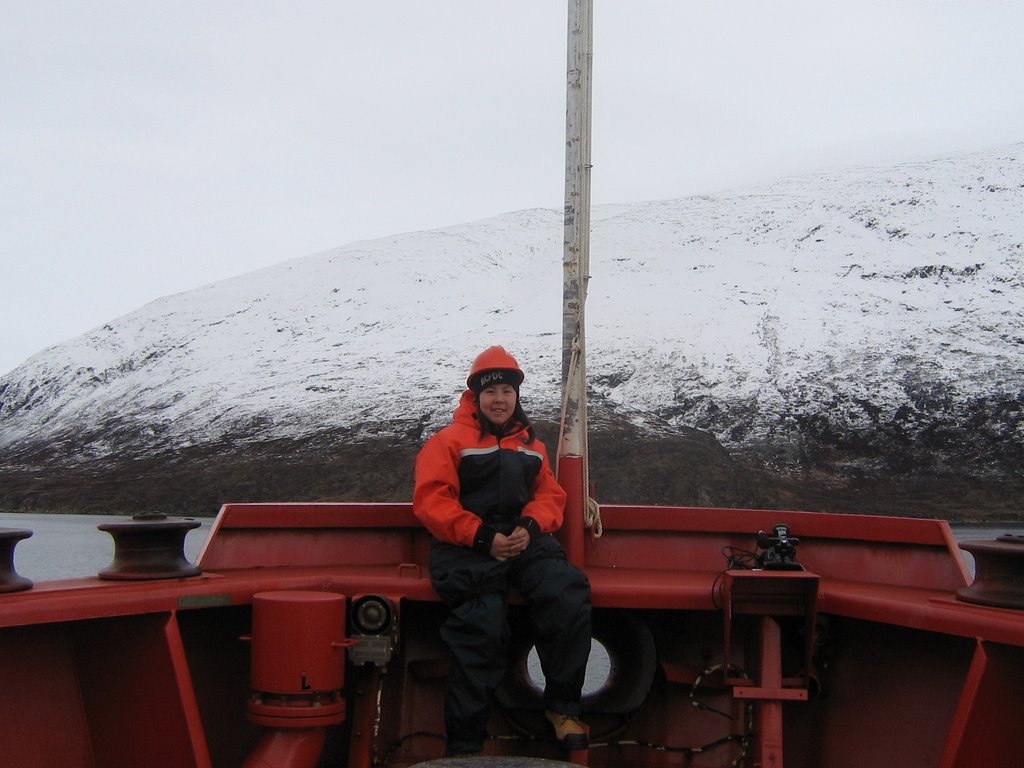 Aimee dressed for the job.




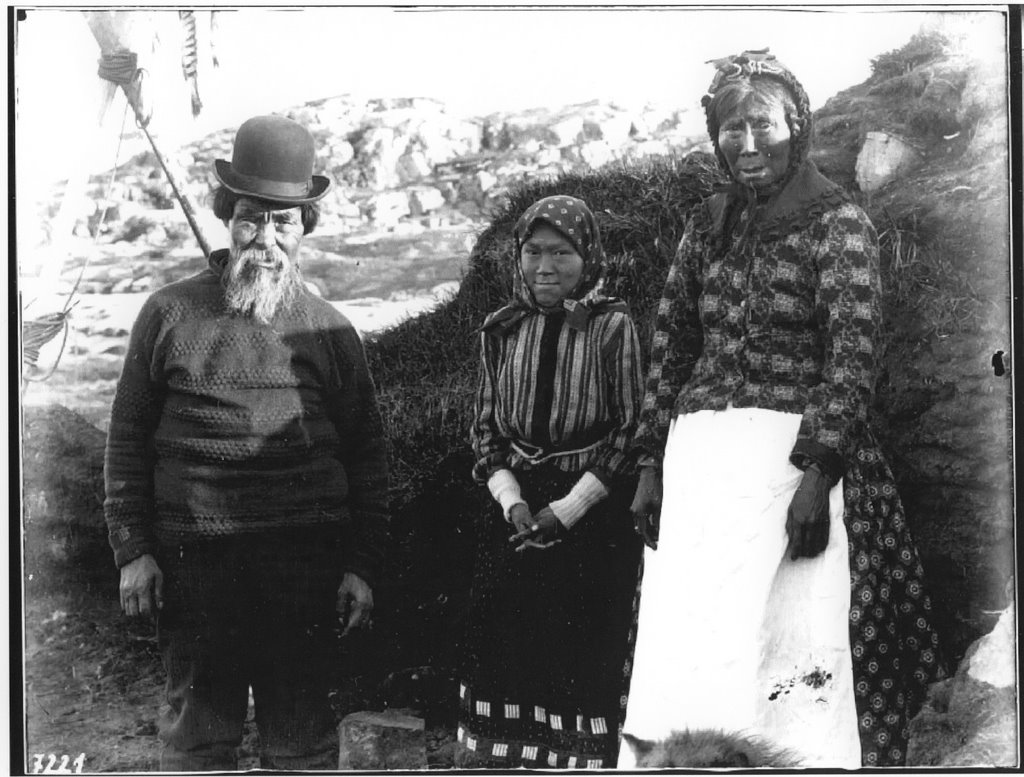
 Seeing that it's mauzy out thought I would post some pictures, two taken by unknown Moravian photogs. The group one is of a Joal Ford, his wife and adopted daughter, Hebron 1909. The solo guy is my wifes grandfather Nathan Frieda, Hopedale 1916.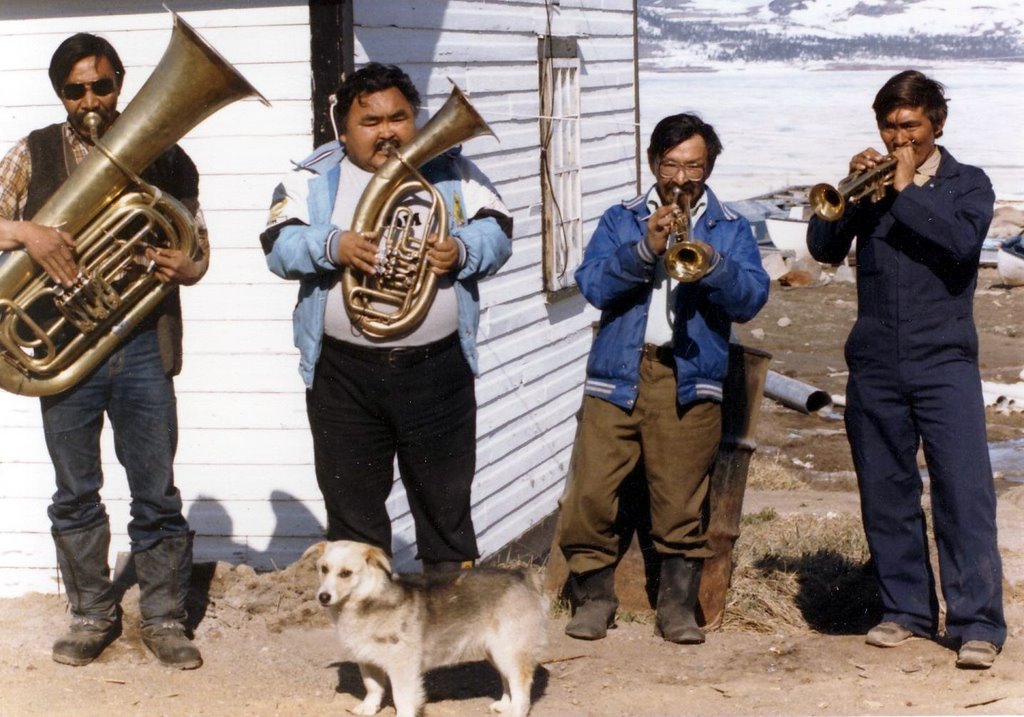


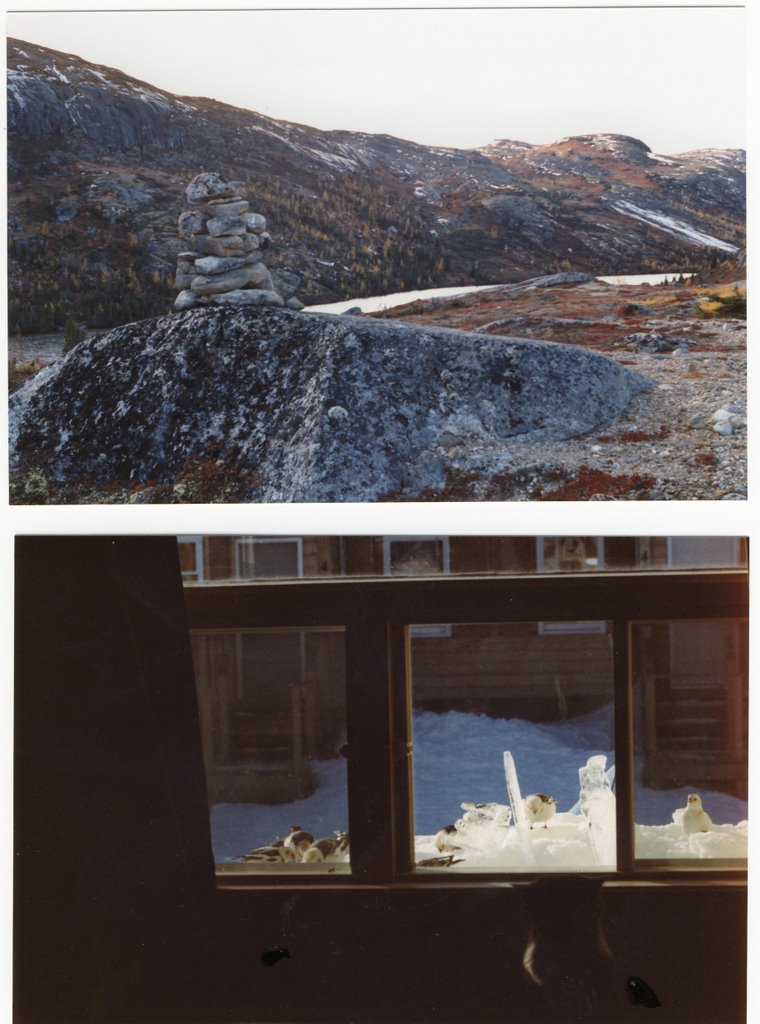 Going through old albums to scane.
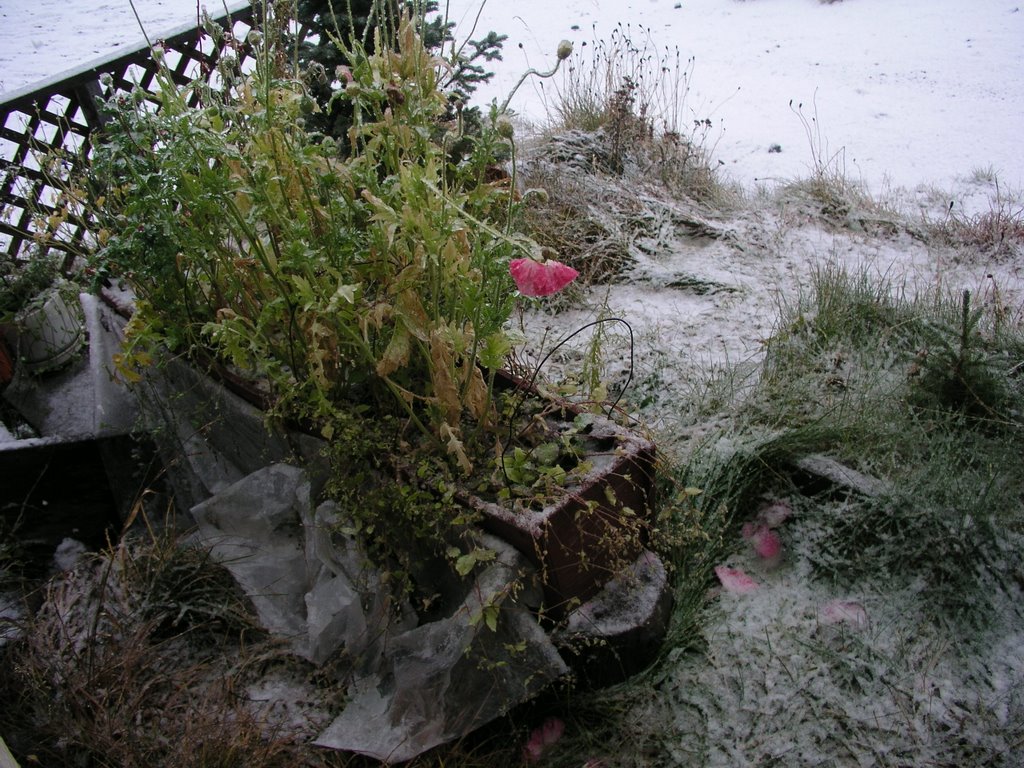 Well that was a quick change in color from this morning, white white white, does not do the last of the poppies much good. Environment Canada got this one right.


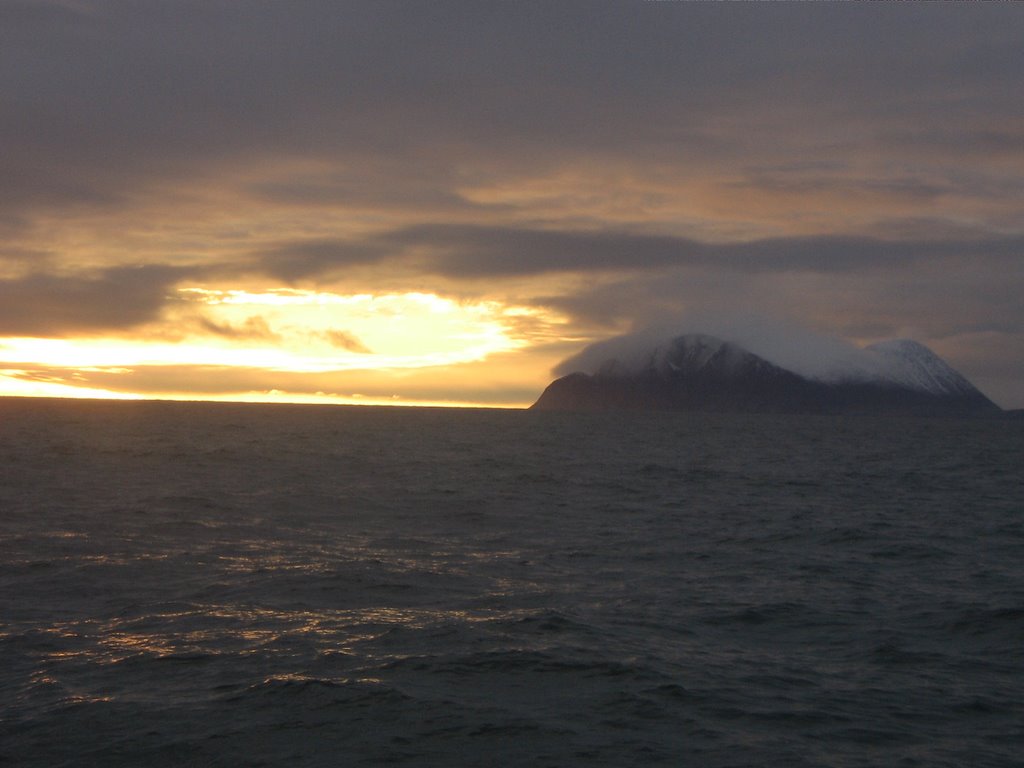
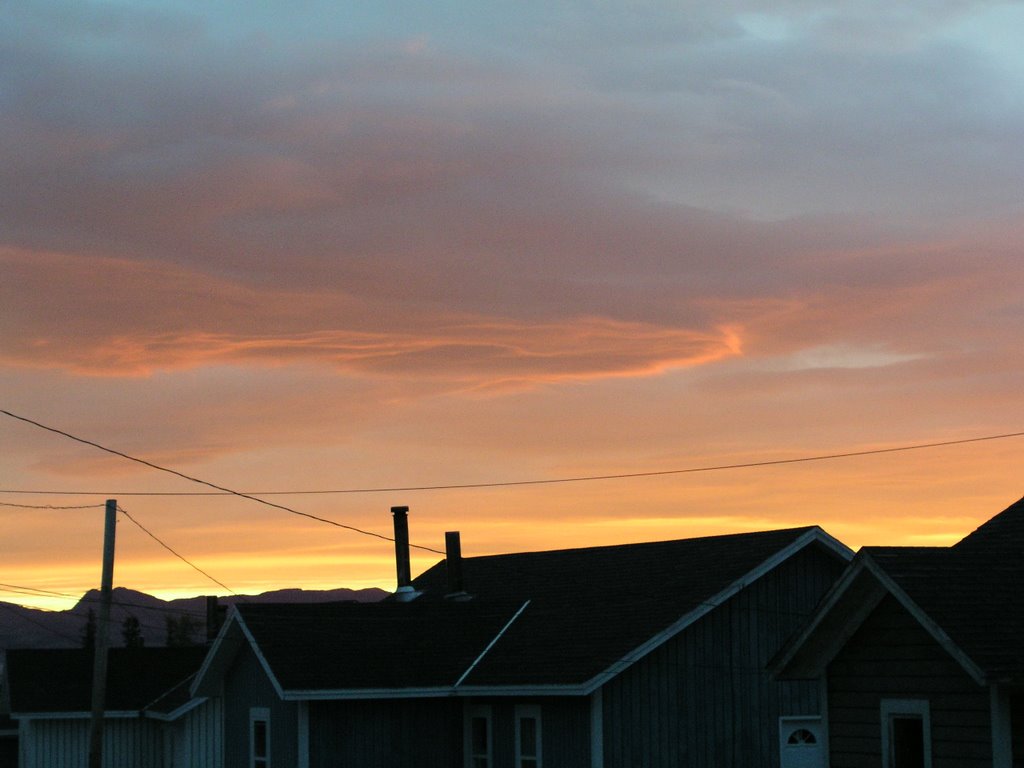 This was the sunrise just after 7, was working away when CBC morning show in Goose Bay mentioned the sunrise, so I took a look.
 Busy with sprucing up the house the past week. Have nephew outside scrapping and painting the Eves, plus other odd jobs.


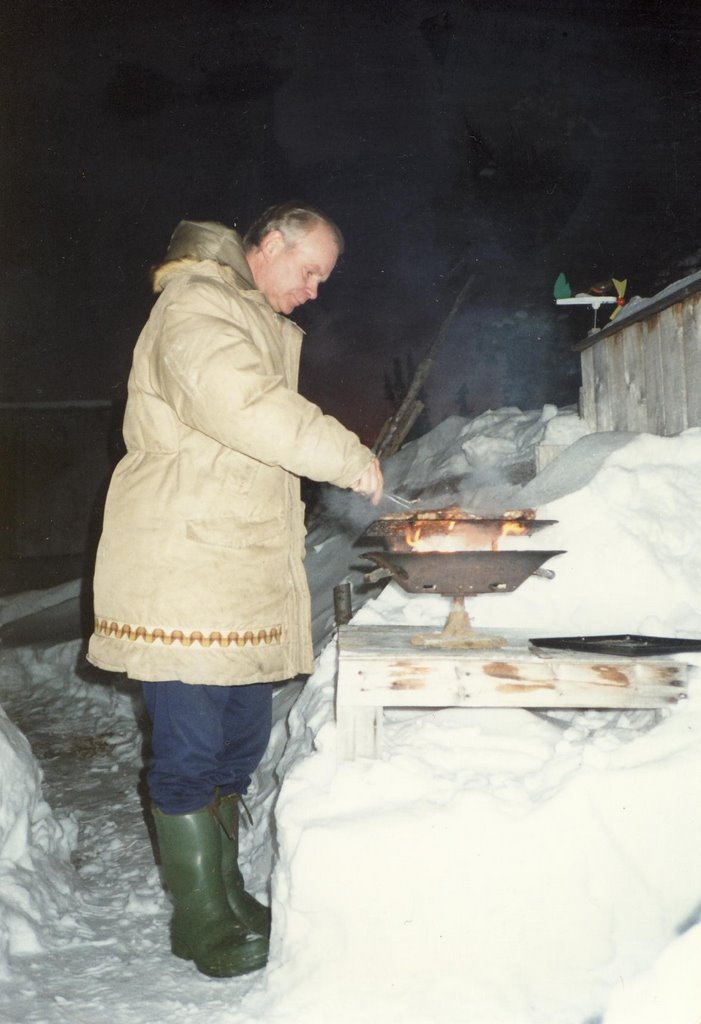 While BBQ'ing yesterday Fran was looking through some old photo albums. Two that came out was one of a cook out in -15 c. I did this quite a lot to beat the flies you see.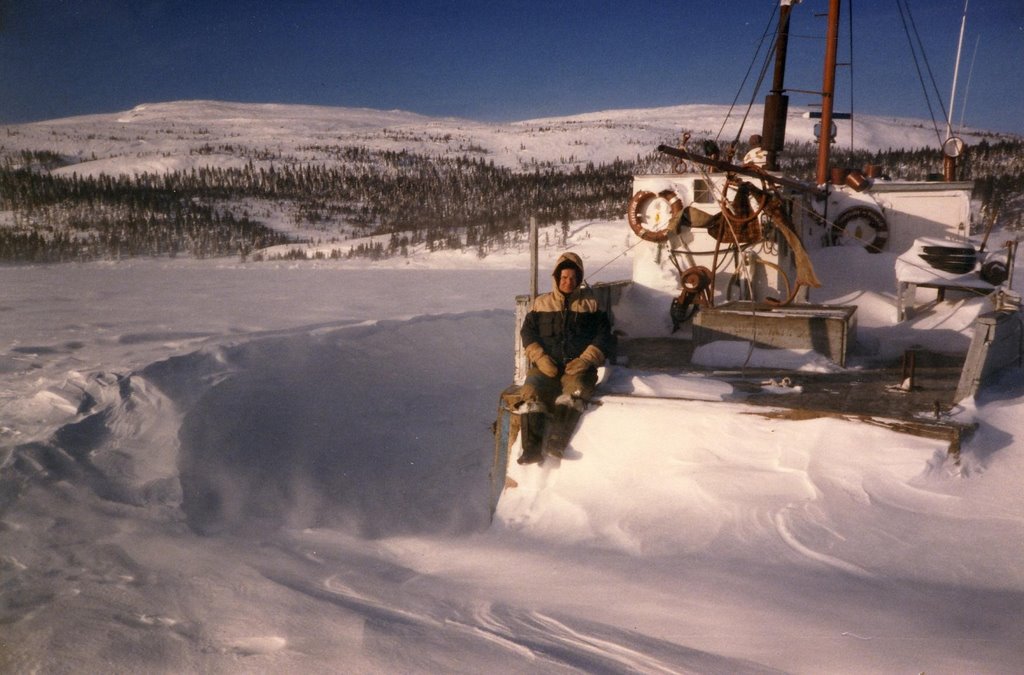
 The little flower box in front is finely producing some color, the pink ones are taking forever to bloom. I like the cream ones, they go to sleep and close up as soon as the sun disappears.
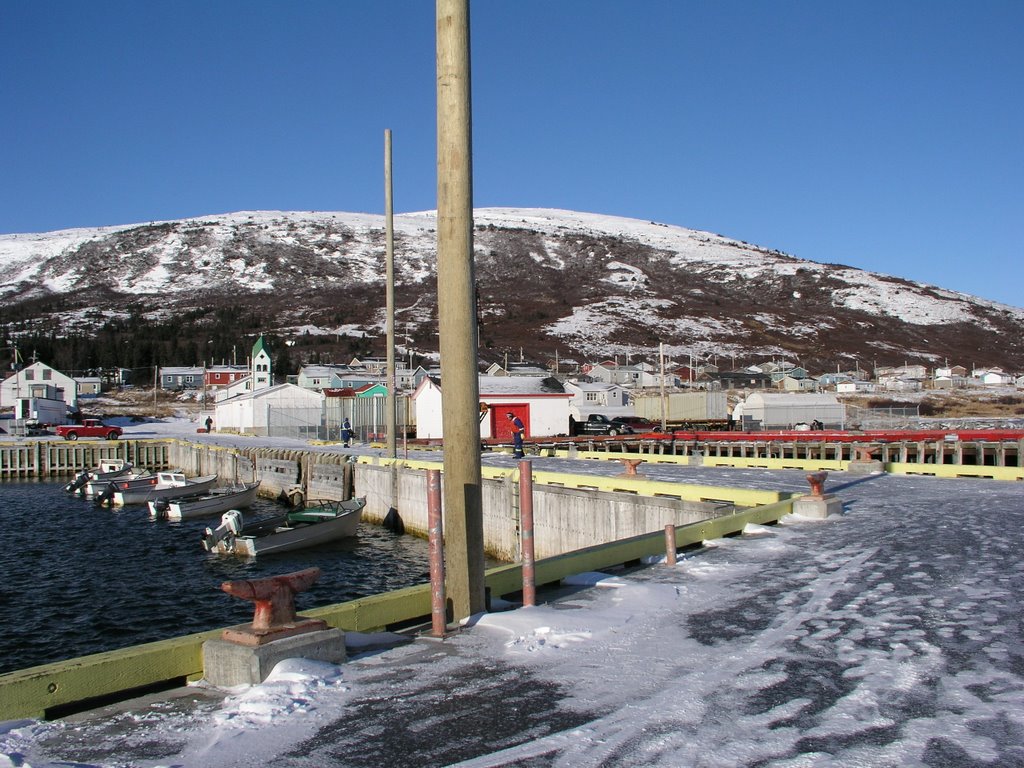
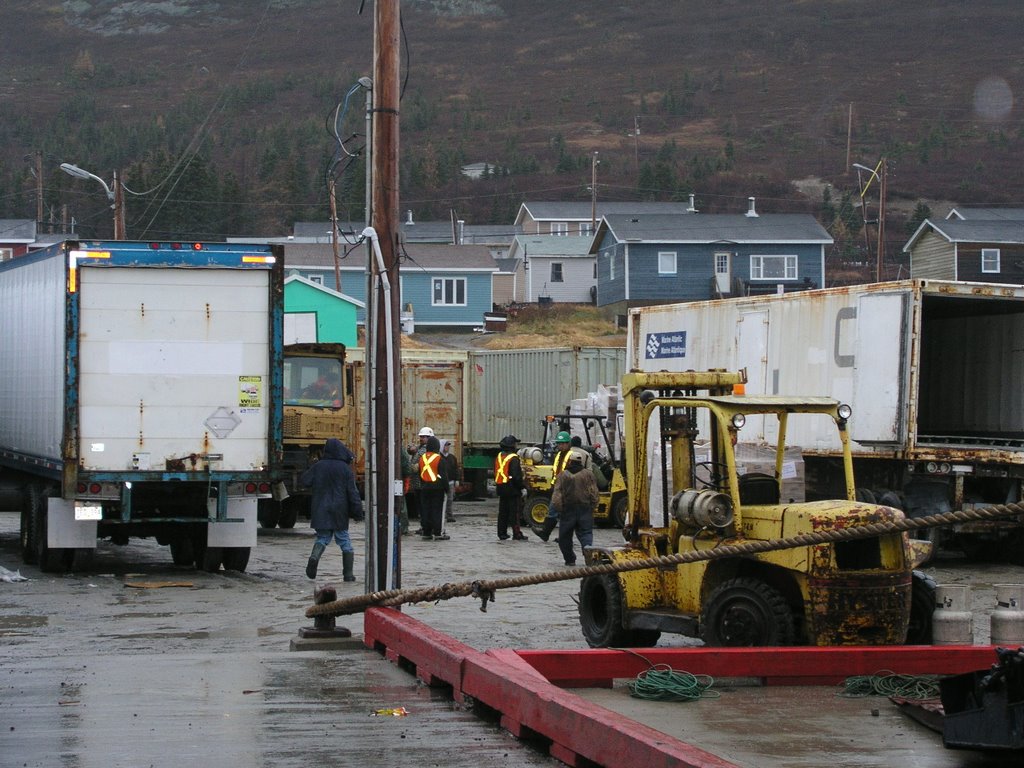
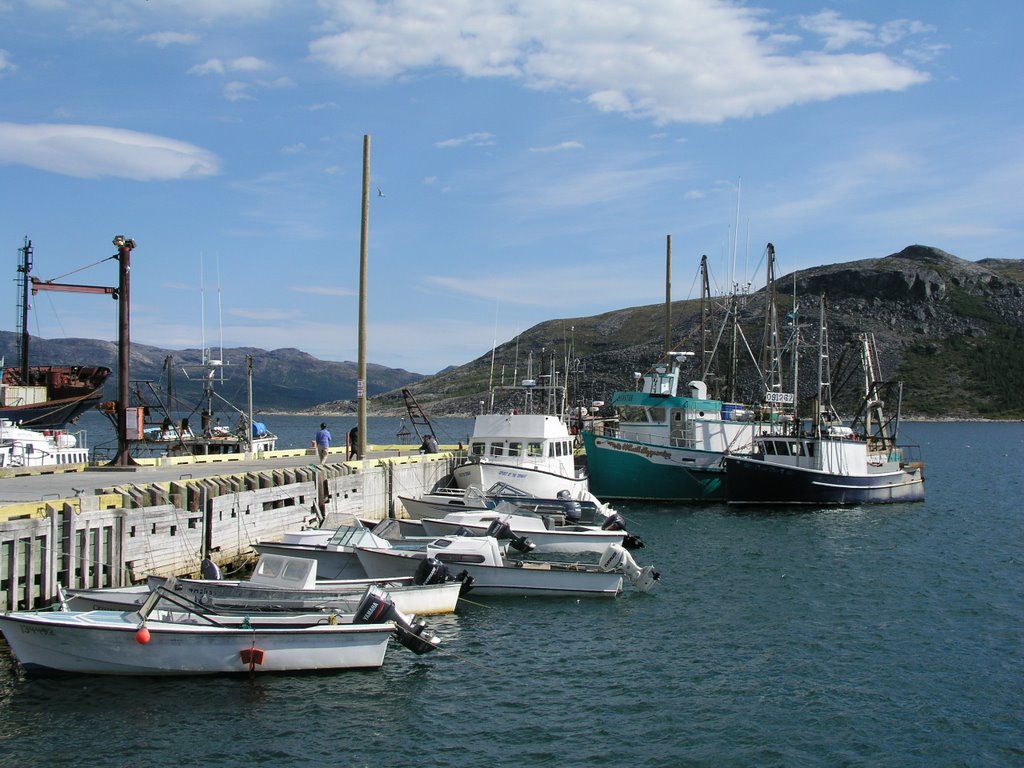 Down the dock there was some action, scallop boat crews doing their weekly maintenance, plant workers getting ready for the new week, crews unloading of the freight boat, quite the idyllic day. In the fish plant workers are getting up to 80 hours a week, that's a lot of scallop and smoked char.
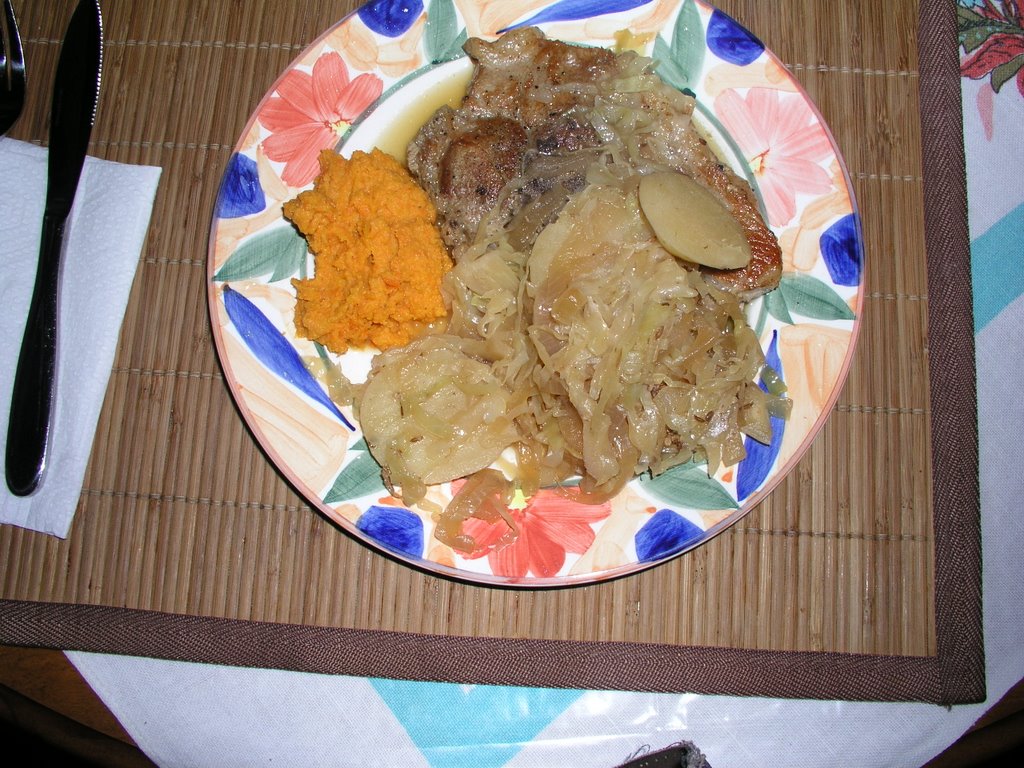
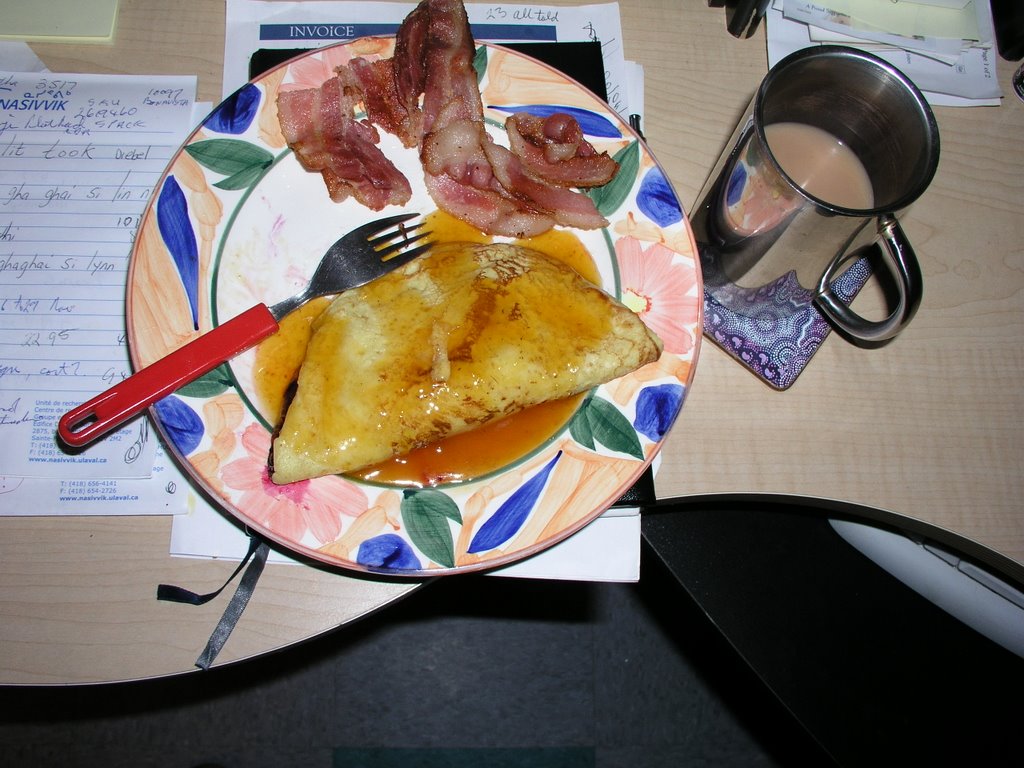 I always have breakfast in front of the computer, the slide in key board tray is handy, never had an, accident to date.